Building Knowledge
Gypsum: The material powering modern building performance
This naturally occurring mineral enables the fire resistance, durability and versatility today's buildings demand
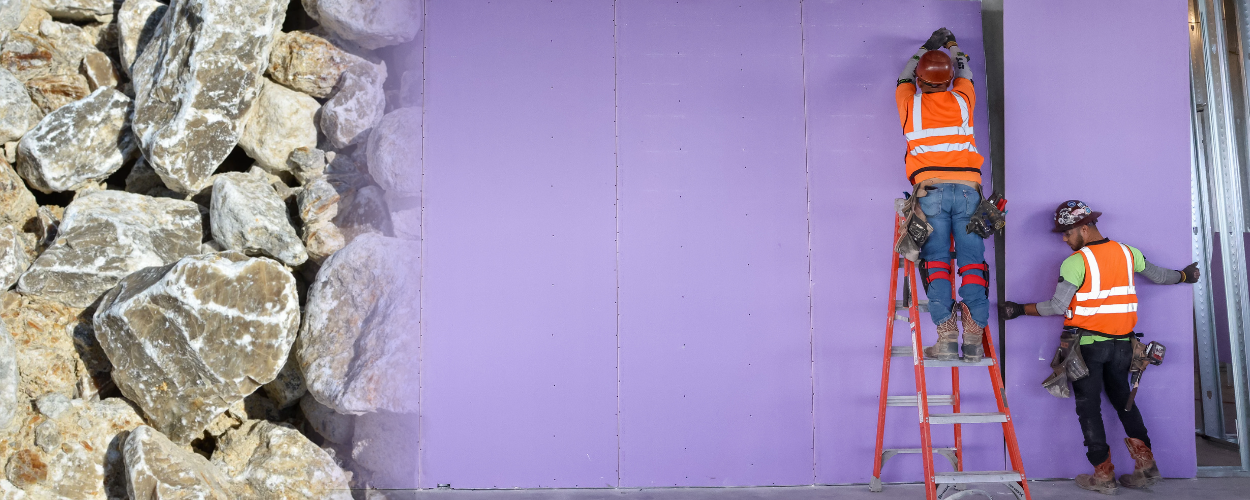
Gypsum is one of the most widely used materials in the built environment, yet its role often goes unnoticed. As a primary ingredient in gypsum board, this naturally occurring mineral is a foundational material in the walls and ceilings that shape the spaces where we live and work.
What makes gypsum so useful is its unique chemistry, which helps deliver critical performance properties, including fire resistance, sound control, durability and moisture management. Manufacturers such as Gold Bond Building Products, LLC, an affiliate of National Gypsum Company, have spent decades building on those inherent properties to develop gypsum systems engineered for increasingly specialized performance demands.
To better understand how modern drywall works and why it performs the way it does, let’s start with the material itself.
What is gypsum?
An inert, naturally occurring mineral, gypsum has been used in construction for thousands of years, from plaster in ancient Egyptian structures to the armor of modern interior wall systems. Today, it most commonly appears as drywall: a lightweight, rigid building material valued for its versatility, reliability and inherent fire-resistant properties.
"The power of gypsum comes from the way it responds under extreme conditions, helping building systems maintain their integrity when it matters most.”
Warren Barber

Warren Barber
Senior Manager of Gypsum and Specialty SystemsNational Gypsum CompanyAt a chemical level, gypsum is calcium sulfate combined with two molecules of water. That structure is what makes it so useful.
When gypsum is heated, it undergoes calcination in which it releases that bound water and becomes a fine powder, commonly known as stucco or plaster of paris. When water is reintroduced, the material rehydrates and returns to a hardened, rock-like state.
That reversible reaction is the foundation of gypsum board manufacturing and the key reason it slows fire, making it an ideal material for fire-rated assemblies.
A simple mineral, engineered for performance
Although gypsum rock was first mined in 1770, gypsum board traces its origins to the early 20th century, when builders sought a faster, more efficient alternative to labor-intensive plaster walls. In 1917, the first gypsum board was patented as a solution to help simplify interior construction, replacing multiple layers of wet plaster with a single, ready-to-install panel.
Adoption was gradual at first, but surged during World War II, when the need for rapid, cost-effective building options made drywall the material of choice. In the decades that followed, gypsum board became the standard for residential and commercial interiors, evolving from a basic wallcovering into a highly engineered system with specialized options for fire resistance, moisture protection, acoustics and durability.
Today’s manufacturers, including Gold Bond Building Products, source gypsum from both natural quarries across the United States and byproduct gypsum, which is produced when power companies scrub their coal-fired emissions to remove sulfur dioxide. This not only ensures consistent quality but also diverts significant material from landfills.
How drywall is made:
After the gypsum rock is mined, it is crushed, dried and ground into a powder, followed by:
- Calcination: Raw gypsum is heated to remove chemically bound water, transforming the mineral into a fine, dry powder known as stucco, the foundational material used to create drywall.
- Slurry formation: The stucco is blended with water, starch, foaming agents and specialized performance-enhancing additives to create a carefully engineered slurry tailored to specific building applications.
- Board formation: The slurry is continuously spread and shaped between layers of strong, durable paper — often made from 100% recycled content — to form the drywall panel.
- Rehydration and curing: As the board sets, the stucco reabsorbs water and recrystallizes into gypsum crystals, creating the stable, rock-like core that gives gypsum board its strength and performance.
Specialized solutions built for modern construction
Gypsum board has evolved far beyond a one-size-fits-all product. Today, architects, builders and contractors can specify boards tailored to highly specific performance requirements.
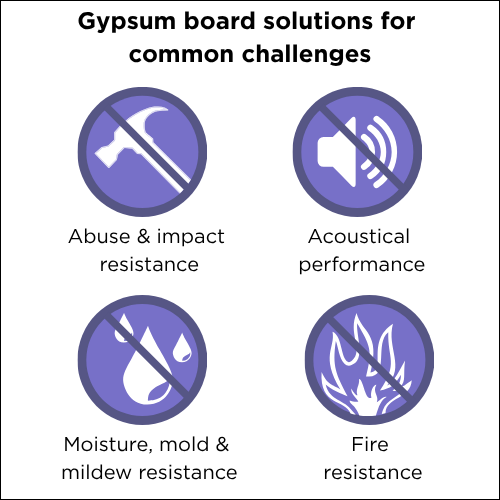
Fire resistance: Type X and Type C boards incorporate fiberglass and other additives to improve fire resistance, which is critical for fire-rated wall and ceiling assemblies. Gypsum’s chemically bound water also plays a key role, releasing steam when exposed to heat and helping slow flame spread.
Moisture, mold and mildew resistance: In areas prone to humidity, treated-core drywall helps inhibit mold growth. High-performing options can achieve top scores on industry tests such as ASTM D3273, making them suitable for bathrooms, healthcare environments and other sensitive spaces.
Acoustical performance: Advanced gypsum systems can also enhance sound control. Solutions that incorporate viscoelastic polymers between dense cores help reduce airborne sound transmission, making them ideal for multifamily, hospitality and office environments.
Abuse and impact resistance: High-traffic environments, including schools, hospitals and commercial building corridors, demand more durable surfaces. Specialized boards are tested to ASTM C1629 standards to resist indentation, abrasion and even penetration into the wall cavity.
Extending performance throughout the building
Gypsum-based systems also play a critical role on the exterior building envelope and in specialized applications.
- Glass mat sheathing provides a durable substrate for exterior cladding systems, with exposure warranties that support construction timelines.
- Hard roof coverboards help improve durability, moisture resistance and overall roof system performance in demanding environments.
- Cavity shaftwall systems enable efficient, code-compliant construction of elevator shafts and stairwells from a single side.
Together, these systems illustrate how gypsum has evolved into a comprehensive building solution, not just a single product.
Innovation in every board
Gypsum may seem like a basic material, but in practice, it’s anything but.
Its unique chemistry enables essential performance benefits. Its manufacturing process allows for consistency and scalability. And its evolution into a family of specialized products gives architects and builders the flexibility to meet increasingly complex demands.
For companies such as Gold Bond Building Products and National Gypsum, the focus isn’t just on producing gypsum boards, it’s on continuously advancing what those boards can do.
Explore the entire portfolio of Gold Bond® gypsum board products, including the EVOLVE™ family, one of National Gypsum’s newest innovations. Designed to be lighter, more sustainable and easier to install, EVOLVE takes a forward-looking approach to Type X drywall while maintaining the fire resistance, durability and code compliance upon which building professionals rely.
Build your knowledge with early access! Sign up for NGConnects updates below.